


Five-layer Blown Film Line for Versatile Packaging Film: Shrink Film vs. Stretch Hood
● Introduction to Shrink Film
Shrink film, made from heat-sensitive materials, shrinks when heated and tightly wraps around the surface of the packaged item. This provides secure packaging, an attractive appearance, and a level of puncture resistance that helps protect the product from external damage.
Since shrink film reacts to heat, storing packaged products in high-temperature environments may cause the film to soften and gradually lose its shrink-wrapping function. Therefore, users must consider the storage environment of the packaged goods. During film production, adding anti-UV additives to the formulation can also help slow the degradation of shrink properties over time.
The heating process used in shrink film packaging may pose a risk of damage to heat-sensitive products. Users must evaluate how temperature affects the item itself and the film's shrink performance. If the temperature is too low, insufficient shrinkage may compromise the packaging quality. On the other hand, excessive heat may damage the product.
Thicker shrink films require more energy during the heating process, increasing production costs. As a result, shrink films are often used for lightweight packaging applications, where thinner films help reduce energy consumption.
Shrink film is widely used in a variety of industries, including food packaging, bundled beverage bottles, pharmaceuticals, stationery, cosmetics, and cables. Its ease of use also makes it popular for general consumer applications.

● Introduction to Stretch Hood Film
Stretch hood film is a modern packaging material designed for automated wrapping systems. It is physically stretched and applied over goods using a stretch hood packaging machine, tightly covering the product. The film contains polyolefin elastomers (POE), which provide excellent holding force, keeping items securely wrapped and maintaining packaging integrity during transport—even under shaking or impact.
With high tear and puncture resistance, stretch hood film protects goods from external damage. Its superior transparency also makes it easier to identify products visually and to scan barcodes or labels during logistics handling.
The use of stretch hood film is becoming increasingly popular. It offers a faster, more convenient packaging method, especially for large furniture and home appliances typically packed with cardboard boxes, Styrofoam, or stretch film. It is also an excellent solution for automated pallet packaging in high-volume production environments.
● Shrink Film vs. Stretch Hood Film
❄ Shrink Mechanism:
Shrink film contracts when heated, causing its molecular chains to rearrange. This shrinkage allows it to tightly wrap the product.
Stretch hood film, on the other hand, is physically stretched and then released over the product. Its elastic recovery allows it to tightly conform to the item’s shape without the need for heat.
❄ Energy Consumption:
Shrink film requires heating during the packaging process, leading to higher energy consumption compared to stretch hood film, which relies solely on mechanical stretching.
❄ Applications:
Shrink film is better suited for lightweight and smaller packaging applications, while stretch hood film is ideal for packaging large furniture and household appliances.
❄ Ease of Use:
Shrink film is more widely used and easier to apply. Most users can complete packaging using just a heat gun or even a hair dryer.
Stretch hood film, however, requires professional automated equipment. Due to its toughness and rebound strength, it cannot be evenly stretched manually.
● Blown Film Line Manufacturing Case
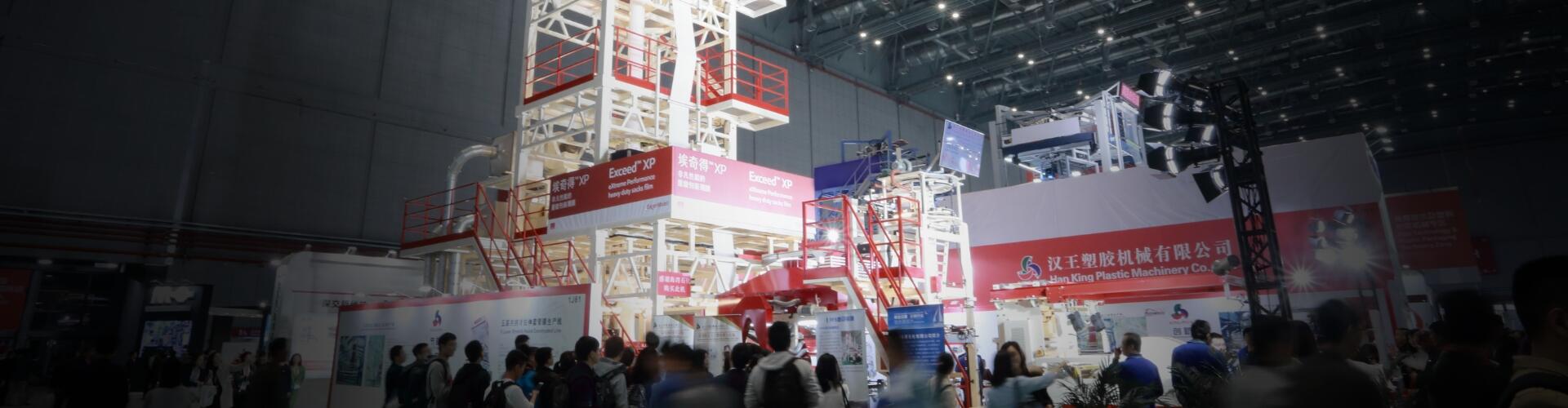
Han King completed the manufacturing of a five-layer co-extrusion PE blown film production line over eight months. The line is designed primarily for producing heat shrink film, stretch hood film and lamination film, with a maximum film width of 2,500 mm.
For the five-layer co-extrusion die head, Han King focuses on a mechanical structure designed for smooth material flow. The die head undergoes multiple stages of precise manual assembly and polishing to minimize material buildup and reduce the risk of carbon deposits, thereby extending both the die head’s service life and maintenance intervals.
- Key integrated systems and components include:
Gravimetric Dosing System、Internal Bubble Cooling System (IBC)、Thickness Profile Measurement and Control System、Trim Edge Recycling System、Slitting and Edge Trimming Device and Back-to-Back Center-Surface Winders.
The machine was disassembled over the course of a week, placed on 38 wooden pallets, and shipped to the customer’s factory in 11 × 40-foot containers.